Thursday, February 18, 2010

Maps, mud, and missing folks...

So, last night while I was waiting for some folks to meet me out at the bar, I took a few minutes to sketch out a little “map” of my project at this point, trying to organize my thoughts.

I’ve been taken with the concept of “mapping” since I read a book by Thomas Gieryn (an IU prof – holla!) where he applies the concept of “map-making” and cartography to the idea of science at various junctures. Basically, his argument is that “science” is not a fixed idea that stays constant through space and time, but rather a claim that people make to give their point-of-view credibility in one way or another. People create boundaries, in other words, to demarcate what science is and, just as important, what it is not to give their arguments more rhetorical weight.

Gieryn examines, for instance, the ways that the US congress and the National Science Foundation (NSF) dealt with social science and whether or not to include it under the NSF or have a whole different program to deal with it. He also looks at things we now think of as “junk science,” most notably phrenology (i.e. reading the bumps on a person’s skull to infer personality traits) and points at which there were turf wars with other sciences and how the different sides staked their claims.

So I thought if he can make a map, so can I. So I started to map out the terrain I'm going to draw from for my talks at the Fulbright mid-term conference in March and my talk at UWI late in Spring semester.

Unfortunately my map started to look like I was planning some really detailed military invasion. Or one of those Arthur Murray dance step charts for a really really complicated dance.

I began to think that maybe what I needed was a 3D representation of what I was thinking about, but then I figured Turok and Asha might have risen from their post-Carnival lull to insist I leave. Arts and crafts at a swanky bar…even on Ash Wednesday that is probably not the best idea.

So what does this mean, besides the fact that my perennial issues with maps and directions have even followed me into graduate school?

I think it’s a good sign. It was a nice exercise, trying to shrink my project down to an index-card-sized drawing, and it helped clarify some things and let me know what areas of my work I need to push a little harder in the next few months. But ultimately it seems what makes a living, breathing, vibrant project is the inability to hack off its extra limbs to make it pretty and neat. Kind of like it’s hard to say exactly why you like someone after you’ve known them for awhile – there are so many little pieces that fit with other little pieces that it’s almost impossible to capture them all at any given moment. [But don’t fault me for trying to do that exact thing below]. Life is messy, so if your project is, essentially about people, their lives, their work, their diseases, and their creative expression, the project needs to be messy, as well.

I’m looking forward to some great oral history-type work in the next few weeks, as well as some intriguing interviews and some really exciting collaborative projects with activists and NGOs here. I love that we can all learn from each other, even if saying that makes me sound like a dirty hippie. I’ll stop before someone cues the tambourines and the Kum Ba Yahs start.

Below are some pictures – of my map, of jouvert, and of Carnival in Trinidad. Jouvert is basically the “opening” for Carnival proper and the beginning of the bacchanal, when the revelers smear themselves in mud, cocoa (which is all over my face), paint (on the side of my face – thanks Svenn and 3canal!), and whatever else to palance around in the streets to transition from “normal” life to the spectacle that is Carnival in Trinidad.


On a more serious note, I’m going to use a little space here to say goodbye to my friend Mike Land who passed away suddenly earlier this week at his apartment in Bloomington. It wouldn’t make sense to go back for the memorial (which is Friday), so I thought I’d make my remembrances here, since this is my blog and I can do what I damn well please with it. I’d known Mike for a few years and we saw each other occasionally to talk about life, love, and school, but we became closer in the last year through, of all things, vampires. Watching True Blood (the HBO series – not to be confused with Twilight) and Chelsea Lately with him last summer (and with Sean when he wasn’t being lame) helped keep me sane through an otherwise stressful time in my life when I was preparing for my qualifying exams, getting ready to move to a different country, and having to sleep on couches and spare beds. I was already starting to look forward to comparing notes with him on the next season of True Blood when it came out...

Mike is also the guy who turned me on to the Sookie Stackhouse novels, which served as the inspiration for True Blood and which I read incessantly during the winter months when I was waiting for my eye exam results and MRI results to come back. Mike was bright, funny, generous to a fault, but had a quick, sarcastic wit I had to work to keep up with. I hadn’t realized until I heard of his passing how much he helped me stay together during some rough times. I never really thought to thank him but I hope he knew.

You’ll be missed, Mike.

Friday, January 29, 2010

More pictures!!!

It's been awhile since I posted, so I figured I'd put up some pictures so you all would know that I'm still alive, anyway...

Also, the US Embassy in Trinidad has a little blurb about me on their facebook page!

Soon to come:

- A more substantive post.
- Pictures of Carnival-related stuff!

Hope y'all back in the US aren't getting too cold!!

The pictures are, in order:

The crowd listening to a local rock band called Cabezon at a bar in St. James.
The view from my apartment a few evenings ago.
Me liming (called "the art of doing nothing" by one academic) with David at Studio, a bar on the Avenue. The third picture is here by the kind courtesy of Saeed Ali.


Saturday, January 9, 2010

New Apartment

Hope everyone had a good holiday season! Nothing exciting to write about at the moment, but I do have a new apartment. Hopefully this will be my last move while I'm down here. Take a look:


Wednesday, December 9, 2009

On Making Connections…

How do ethnographers make connections between our on-the-ground work and relevant theory? And, over and beyond this, once we have hashed these connections out for ourselves, how and when do we try to make them explicit to our informants and colleagues in the field?

Granted my project is a little strange…it’s not just about songs that talk about AIDS directly, although they are a large part of it. It’s also about the social and cultural uses of certain genres, the ways that AIDS discourse and musical discourse intersect, and the ways that Non-Governmental Organizations (NGOs) and Community Based Organizations (CBOs) harness the “power of music” for their own purposes. Interestingly that “power” is oft-discussed but not often actually examined in its own right…but I digress.

Many of our informants don’t want mini-lectures. Hell, many of our colleagues, friends, students, and professors don’t want them either. Nonetheless, they are good enough to take time out of their day to explain things to me, answer my questions (that they sometimes think are stupid – I have gotten good at reading body language), and generally lime (Trini for hang out) with me for anywhere from 30 mins to a few hours. I have to do some sharing too, but “I’m looking at the ways that music and HIV/AIDS are connected in Trinidad” generally doesn’t cut it. Since they generally have some stake in this in terms of music and/or public health, they’re curious.

But because my mind goes towards Big Theoretical Places quickly, I tend to explain in a very top-down way. That sometimes leaves my informants with the impression my project is a little malformed. After all, how does one connect memorial services, mas bands, sexual culture in Trinidad, the spoken word scene, open mics, and, tangentially, literature and art into one coherent project? I can see it, but when I try to explain it to anyone else it seems garbled and confused.

That probably means I should wait for quite awhile before I start writing.

But I am not just making connections between “data” and theories, I am also making interpersonal connections. Some acquaintances that I am meeting through work, and some friends that I meet while doing work and while liming after work. However, all of these people, whether they like it or not, are connected to my research. Since my life is my research now, for better or worse, it never stops. Of course, sometimes it takes a back burner – I don’t take notes when I’m out at a bar with people, or in line at a food vendor, or in a cab. But I am always there, always listening, always, in the very very back of my mind, thinking. And when I sit down at night to write up fieldnotes – even on days when nothing seemed to happen – sometimes odd things pop out.

Like the other night, my fieldnotes strayed to the interactions of patrons at a bar, and the way that bar patrons outside interact with people walking or driving by on the street. I thought it was funny, so I texted a friend of mine who frequents the bar that I was writing up fieldnotes about our evening lime, and he called back. Granted, he couldn’t text right then, but still it felt rather dramatic. I’m not sure if it freaked him out (sounded like it did!), or if he was just curious. But if part of my research is on the way that gender, music, and HIV are connected, there are few better places to investigate gender relations than at a bar.

But how and when do I “come out” as a researcher who is actually doing research right that second!!!!? I mean, all of my friends, acquaintances, etc. know that I am here doing research and that my research is on the connections between music and HIV/AIDS in Trinidad. Full stop. People are always curious why I’m here so that is one of the first questions I am typically asked.

But there is a difference between knowing I am a researcher who is reading books, going to shows, and doing formal-ish interviews, and knowing that I am a researcher who is writing and thinking about my interactions with you right that second. I’m reminded of Laurie Anderson’s “Language is a Virus” from her magnum opus, United States I-IV

Well I was talking to a friend
And I was saying: I wanted you.
And I was looking for you.
But I couldn't find you.
I couldn't find you.
And he said: Hey!
Are you talking to me?
Or are you just practicing
For one of those performances of yours?
Huh?

Do I need to buy a hat that I put on when I’m “researching”? How can I be genuine in my relationships with others while still doing my research? I am – and have been – living this project on and off since 2006, so of course the concerns and goals of my work are leaking over into my personal life (and vice versa). But if I am only documenting and writing up publicly observable behavior and not spilling secrets and dishing dirt, do I need to feel all ethically challenged?

Thoughts, fellow ethnographers?

And now for some pictures!!!! The city of San Fernando at night, the cornbread I took to our little Thanksgiving celebration, and central Trinidad from the vantage point of the church on Mount St. Benedict, near the University of the West Indies.


Tuesday, November 17, 2009

Tobago!

So my trip to Tobago was kind of a bust, research-wise. One of the people I wanted to meet was actually in Trinidad over the weekend - I think we passed each other while I was on my way back to Trinidad and she was on her way back to Tobago. And the concert I've been so excited about? It got canceled. The organizer and one of the performers got up and talked and tried to explain, but really offered no great explanation for why it was canceled (and for why they didn't tell anyone until we were actually AT the venue).

Luckily, we can get our money back for the tickets.

On the other hand, I had a great time going to two of Tobago's beautiful beaches, Store Bay and Pigeon Point, both in the Crown Point area. I'll be tan for Christmas!

I also met a wonderful woman named Michelle Timothy who volunteers for Tobago Oasis, a support group for HIV-positive persons in Tobago. We had a great hour-long conversation which I hated to see end so soon. I feel sure our paths will cross again, and I am most definitely looking forward to it. Michelle also put me back in touch with some contacts I had made here when I visited in 2007, for which I am incredibly grateful. So the next week will (hopefully) be full of interviews and music!

Finally, I also just got word that my award (and the awards of all the other fabulous IU students that won Fulbrights) was mentioned on the IU faculty and staff news webpage! Lots of neat projects going on at IU...

And now for a few pictures of the beaches at Tobago. Anyone want to come visit?


Store Bay Beach, Tobago


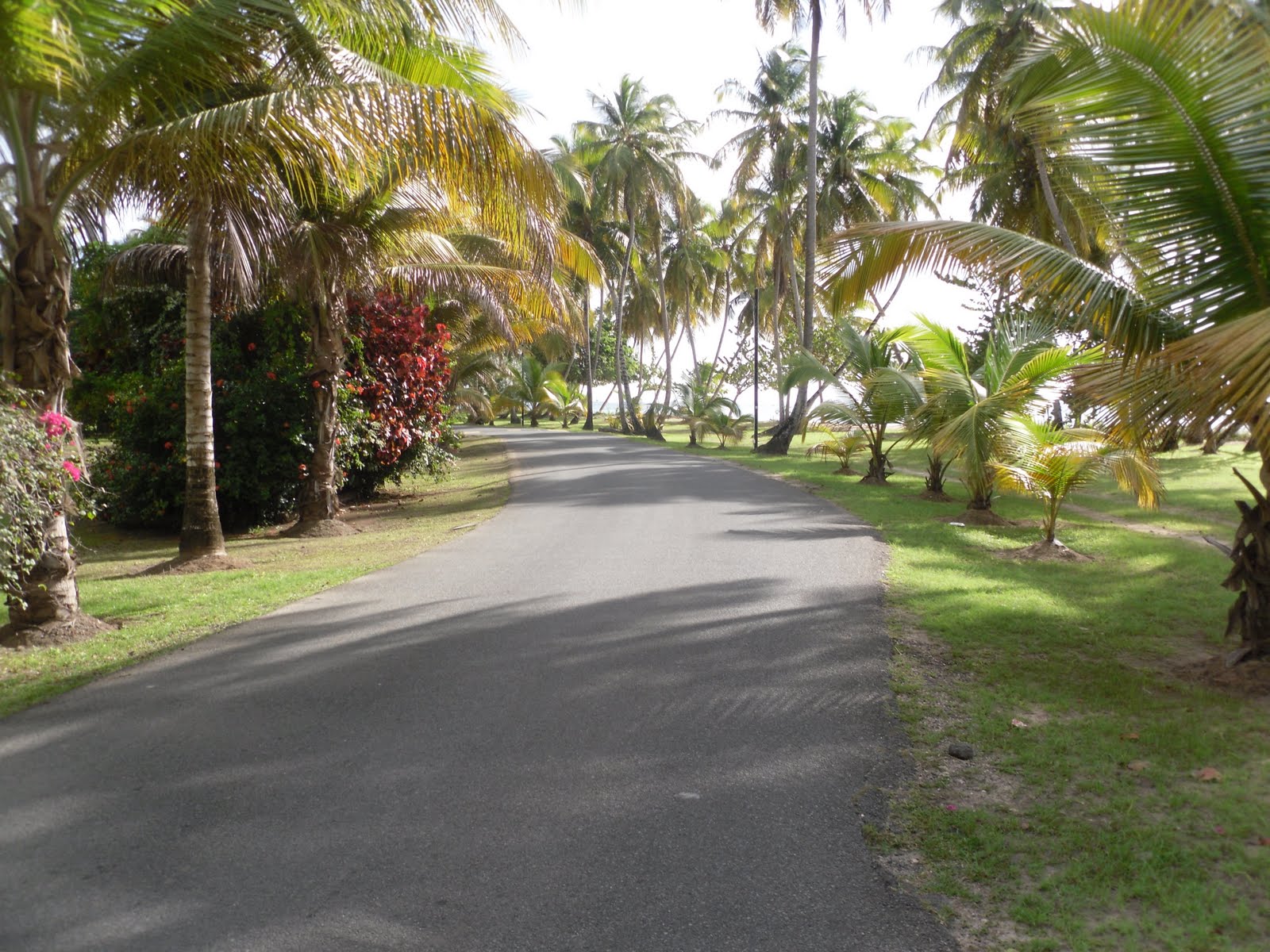
The road to Pigeon Point Beach, Tobago


The iconic picture of the beach at Pigeon Point


Another view of Pigeon Point

Monday, November 9, 2009

Coming soon!!

So, I'm making a short post here about exciting things that are going to be happening soon. Not so much for anyone else to read, but so I'll feel responsible to be a Good Fieldworker, take notes, etc. and then post about the goings-on once I'm done.

Tuesday: Open Mic in San Fernando (in the southern part of Trinidad).

This weekend: Huge calypso concert in Tobago (Trindad's sister island), and possibly meeting some of the folks in charge of AIDS programmes in Tobago.

Next week: Another open mic-type thing at the University of the West Indies, meant to be organized as a response to the Commonwealth Heads of Government Meeting.

End of the month: Parang (Spanish string-band Christmas music) fundraiser in San Fernando for South AIDS Support.

See you guys on the other end!!

Tuesday, November 3, 2009

Phantom fundamentals: What is the sound of one dissertation topic clapping?

“The echo of the completely empty valley bears tidings heard from the soundless sound” – Yamaba

I’ve been thinking for the past few days about an acoustical-cognitive phenomenon called the phantom fundamental. Basically, there is a mathematical relationship between the pitch we hear (the fundamental) and the higher overtone frequencies that are “packaged” with that pitch to give it a distinct tone color. Overtones are the reasons that a trumpet sounds like a trumpet and a fake trumpet sounds like a fake trumpet. They’re also probably responsible for making the heavily auto-tuned actors on Glee sounds like radioactive aardvarks.


Our brain expects that if the overtones are arranged in a certain way, that the fundamental pitch will fall in line. Our brain expects it so much that it will fill in the fundamental pitch if it is missing. So we, theoretically, could hear a tuba playing a low C even if the recording had been digitally altered so that the lowest pitch actually present acoustically was an octave above the note that we perceive.


So why am I thinking about this tonight? Partly because I count audiophile Nina Fales as a friend and colleague. And partly because my fieldwork project has become like a missing fundamental. There seems to be a dearth of music about HIV/AIDS at the moment, but it’s still hanging around the edges of everyone’s brains.


I’ve only been at this two and a half weeks and I’ve already heard from a number of people that “there were a few songs like that some years ago” and “there were some commercials, but no one is recording songs like that anymore.” Selwyn Lewis of The Barcam, a community organization originally based in Point Fortin, insinuated that HIV/AIDS funding was at a high point when I visited Trinidad and Tobago to plan my project in 2007, but is now drying up.


There are, of course, still organizations like The Barcam and Arts-in-Action, based at the University of the West Indies, which continue to use music in HIV/AIDS prevention. But the popular music world seems much quieter than it was just two years ago.


So does my project become more archaeological from here? Is it about re-thinking earlier times when AIDS and music came together, like calypsonian Merchant’s illness and death, Peter Minshall’s 2006 mas band, Godfrey Sealy’s musical, and the songs penned by Shadow, Ras Shorty, and Sparrow? Can I re-think those things from the time-space of the contemporary TT music scene(s)?


I still think there’s a dissertation here…I just need to figure out where it is.


And for those of you who like pictures, here's a picture to prove it really is rainy season here in Trinidad.